
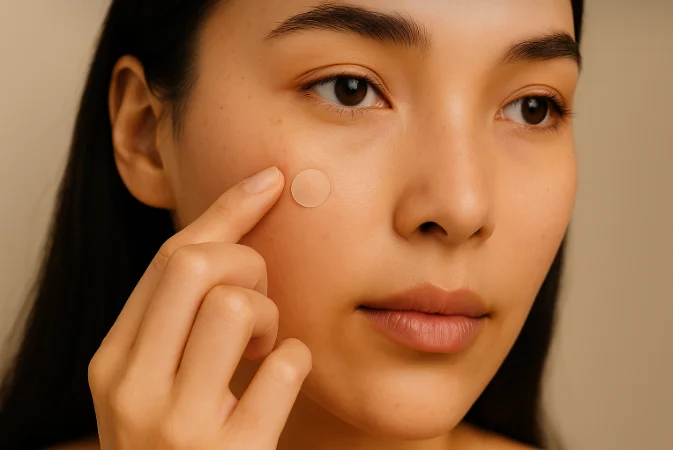
Pimple patches have quickly become one of the most talked-about skincare trends. They’re small, transparent, and claim to make blemishes disappear overnight — a dream for anyone dealing with an unexpected breakout. But do they really work, and are they suitable for everyone?
According to Dr. Antti Rintanen, a doctor and founder of The Internet Doctor, “Pimple patches can be an excellent tool for surface breakouts, but they’re not a cure for every type of acne.”
How Pimple Patches Work
But how do pimple patches work? Most pimple patches use hydrocolloid, a soft, gel-like material originally created for wound healing. When placed on a pimple, it absorbs fluid, oil, and pus while sealing the area from external bacteria. The patch keeps the skin moist — an ideal environment for faster healing — and prevents the constant touching or squeezing that often makes acne worse.
Some patches also include active ingredients like salicylic acid or tea tree oil, which can help calm redness and promote skin renewal. The idea is simple: protect the spot, reduce inflammation, and let the skin repair itself naturally.
When They Work Best
Hydrocolloid patches are most effective for small, surface-level pimples, such as whiteheads or newly formed blemishes. These are close enough to the surface for the patch to absorb fluid and flatten the bump.
They also serve a behavioral purpose — covering a pimple makes it less tempting to touch, which helps prevent bacterial infections and scarring. For people who struggle with picking or over-cleansing, that alone can make a noticeable difference.
Because they’re often nearly invisible, many people use them overnight or even under makeup during the day. They’re easy, discreet, and convenient — perfect for mild breakouts that don’t need stronger treatment.
When Not to Use Them
Pimple patches have limits too. They can’t reach deep, cystic acne that forms under the skin’s surface. Those painful bumps require a different approach — often anti-inflammatory products or medical treatment.
It’s also best to avoid using them on broken or open pimples, since the hydrocolloid won’t stick well and could irritate the area. They’re designed to adhere to intact skin, but not open wounds.
And while they can help with occasional pimples, they shouldn’t replace a full skincare routine. Consistent cleansing, hydration, and healthy habits do far more for long-term skin balance than any single product.
The Bigger Picture
Dr. Rintanen emphasizes that true skin health starts deeper than the surface. “If you’re constantly relying on pimple patches,” he explains, “it may be worth looking at what’s triggering the breakouts — whether it’s stress, sleep deprivation, or diet.”
High stress levels typically raise cortisol, leading to more oil production. Poor sleep can slow skin regeneration, while excess sugar or processed foods may fuel systemic inflammation. Pimple patches can help manage the symptom, but addressing the cause leads to clearer, more resilient skin.
How to Use Pimple Patches Effectively
To get the best results, apply pimple patches properly:
- Start with clean, dry skin. Oil or residue prevents the patch from sticking.
- Choose the right type. Plain hydrocolloid for whiteheads, medicated patches for red or inflamed spots.
- Leave it on long enough. At least six hours — overnight is ideal.
- Remove once it turns opaque. That means it has absorbed fluid and done its job.
Used this way, a patch can speed up healing, reduce redness, and prevent scarring — all without harsh ingredients.
Final Thoughts
Pimple patches are not magic, but they are grounded in real medical science. They offer a clean, effective, and yet low-maintenance way to treat mild breakouts while supporting the skin’s natural healing process.
As Dr. Rintanen puts it, “They’re best used as a smart tool — not a crutch. Protect your skin, avoid picking, and focus on overall health for lasting results.”
When combined with good habits and balanced skincare, these small patches can make a big difference in helping your skin stay calm, clear, and confident.